
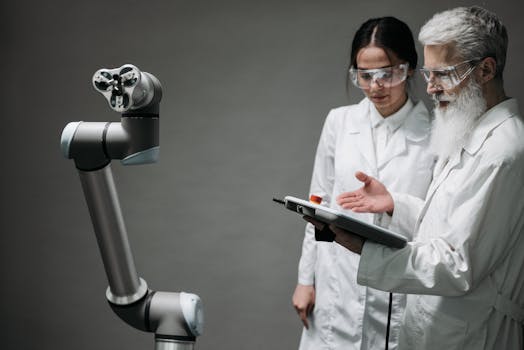
The Announcement of Robin
AIbase.cn, a major Chinese AI news aggregator, reported on the emergence of Robin, described as the world's first fully automated AI scientist. According to the brief headline, Robin can complete a complete scientific research process in just two hours, an acceleration of several orders of magnitude compared to human-led research that typically spans weeks or months. The report does not name the development team behind Robin, but the claim of being the first fully automated system places it at the forefront of efforts to use AI to automate hypothesis generation, experiment design, data collection, and paper writing.
The two-hour figure is particularly striking. Current state-of-the-art automated research systems, such as Sakana AI's AI Scientist released in August 2024, require a full day to produce a paper and have been criticized for generating trivial or flawed results. If Robin indeed delivers a full research cycle—from literature review to final manuscript—in 120 minutes, it represents a qualitative leap. The report lacks technical details, so independent verification remains pending, but the announcement signals that Chinese research teams are aggressively pushing the frontier of AI for science.
Understanding a Fully Automated AI Scientist
A fully automated AI scientist is a system that performs the complete scientific method without human intervention. In theory, it reads existing literature, formulates novel hypotheses, designs and runs experiments (either in simulation or via robotic lab equipment), analyzes results, and writes a publication-ready paper. Robin's reported capability to compress this pipeline into two hours implies tight integration of large language models for reasoning, code execution for modeling, and possibly access to automated lab infrastructure.
Existing systems like Sakana AI's model rely on iterative loops where a language model proposes ideas, another model writes code to test them, and a reviewer model scores the output. That system takes approximately 24 hours per paper. Robin's two-hour timeline suggests either a more efficient architecture, or that the research scope is narrower. The headline on AIbase.cn does not specify the domain of research—could be chemistry, biology, or material science—but the phrase “颠覆传统科研范式” (overturning traditional scientific paradigms) implies a general-purpose design.
The speed gain, if real, would primarily come from eliminating human bottlenecks: literature reading (hours), coding (days), and data interpretation (hours). Automating these steps with specialized agents could compress the timeline. However, the quality of such rapid outputs remains a central concern. As of early 2025, no known automated system has produced a publication accepted by a peer-reviewed journal without substantial human revision. Robin's developers would need to demonstrate that its two-hour outputs meet scientific standards.
Comparison with Existing Automated Research Systems
The AI-driven research automation space has seen several entrants. In 2024, Google DeepMind's AlphaFold3 automated protein structure prediction but not the full research loop. Sakana AI's “AI Scientist” came closest, generating papers on machine learning topics autonomously, but it could only produce low-quality papers with flawed code and data leakage. More recently, companies like Synthace and Automata have focused on automating lab experiments, yet they rely on humans to formulate hypotheses. Robin appears to attempt an end-to-end solution.
The two-hour timeline puts Robin ahead of any publicly known system. For context, the average human PhD student might take six months to a year to complete a first-author paper. Even cooperative AI-human teams using tools like GitHub Copilot and experimental robots take days. If Robin's claims hold even in a restricted domain, the implications for industries like pharmaceuticals or materials discovery are enormous. A system that can iterate through hundreds of hypotheses in a week could drastically reduce the time to find novel drugs or catalysts.
However, the lack of detailed methodology in the AIbase report is a red flag. No preprint, GitHub repository, or demo has been linked. This pattern is common in early-stage announcements from Chinese AI labs—sometimes leading to breakthroughs like DeepSeek-V3, sometimes to unverified hype. The 345tool.com audience should treat the report as an interesting signal but wait for technical validation.
Implications for the Scientific Community
If Robin proves effective, it could democratize science. Smaller labs with limited computational budgets could use Robin to explore research directions that would otherwise require large teams. The ability to run hundreds of automated experiments in parallel might also increase the reproducibility crisis by standardizing methods. Conversely, bad actors could use such tools to flood journals with low-quality papers, damaging scientific integrity.
The Chinese scientific ecosystem has shown strong interest in AI for science. National initiatives like the “Science for AI” roadmap and investments in AI-powered labs in Shenzhen and Beijing align with Robin's concept. The report on AIbase.cn, a platform trusted by Chinese tech professionals, suggests that the announcement has domestic credibility. Global researchers should watch for releases from groups like the Beijing Academy of Artificial Intelligence (BAAI) or Shanghai AI Lab, which might be behind Robin.
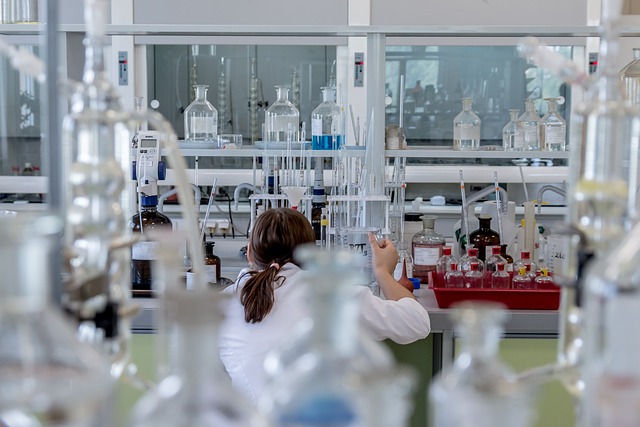
There is also a geopolitical angle. The United States and Europe are investing in similar systems—for example, the US NSF's “AI institutes” for scientific discovery. If a Chinese team truly delivers a fully automated AI scientist first, it could shift the balance of scientific output. However, major hurdles remain: real-world labs require physical robots and costly reagents, which are hard to automate fully. Robin might initially work only in computational sciences like machine learning or physics simulations.
Challenges and Considerations
The largest challenge for any fully automated AI scientist is validation. Scientific knowledge is built on trust and replication, and automated systems are prone to subtle errors, hallucinated citations, and confirmation bias. Sakana AI's system, for instance, sometimes compared its results against the same dataset it trained on, producing inflated performance numbers. Robin would need robust guardrails against such flaws.
Another concern is cost. Running a high-iteration automated system over many hours consumes substantial GPU time. If Robin's two-hour cycle requires expensive frontier models or cloud compute, the economic advantage over human scientists may be narrow. Pricing details are absent from the report, so it is unclear whether Robin is a free research prototype or a commercial product.
Finally, the human element cannot be ignored. Science requires creativity, skepticism, and cross-disciplinary intuition that current AI systems lack. While Robin may handle well-defined tasks, it likely cannot invent a new field or question fundamental assumptions. The best use may be as an accelerator for low-hanging fruit in highly structured domains.
Forward-Looking Analysis
The Robin announcement on AIbase.cn is a potential watershed moment, but one that demands cautious optimism. If the two-hour automated scientist becomes a reality, it will accelerate research cycles and challenge how we define authorship and rigor. The AI community should pay attention to whether the underlying code is open-sourced and whether any peer-reviewed validation emerges. For now, Robin joins the growing list of ambitious AI-for-science projects that promise to change how knowledge is created. The next step is to move beyond headlines and into reproducible experiments.

评论